English
 한국어
한국어 Español
 العربية
 dansk
dansk Ελλάδα
Fabric selection has a direct impact on how a custom split swimsuit fits, feels, stretches, dries, and performs after repeated exposure to water, chlorine, salt, sunscreen, and sunlight. For brands developing a commercial swimwear collection, choosing a fabric based only on softness or appearance is rarely enough. Stretch recovery, wet opacity, colourfastness, lining compatibility, print performance, and long-term shape retention all need to be considered before bulk production.
Nylon-elastane and polyester-elastane blends remain two of the most common options for modern swimwear, but they serve slightly different priorities.
Nylon-rich fabrics are generally valued for their smooth surface, soft hand feel, and excellent body conformity. They work particularly well for fashion-led bikinis, resort collections, ruched designs, and styles where a premium skin feel is important. Polyester-rich fabrics are often selected when durability, print stability, and repeated pool exposure are more important.
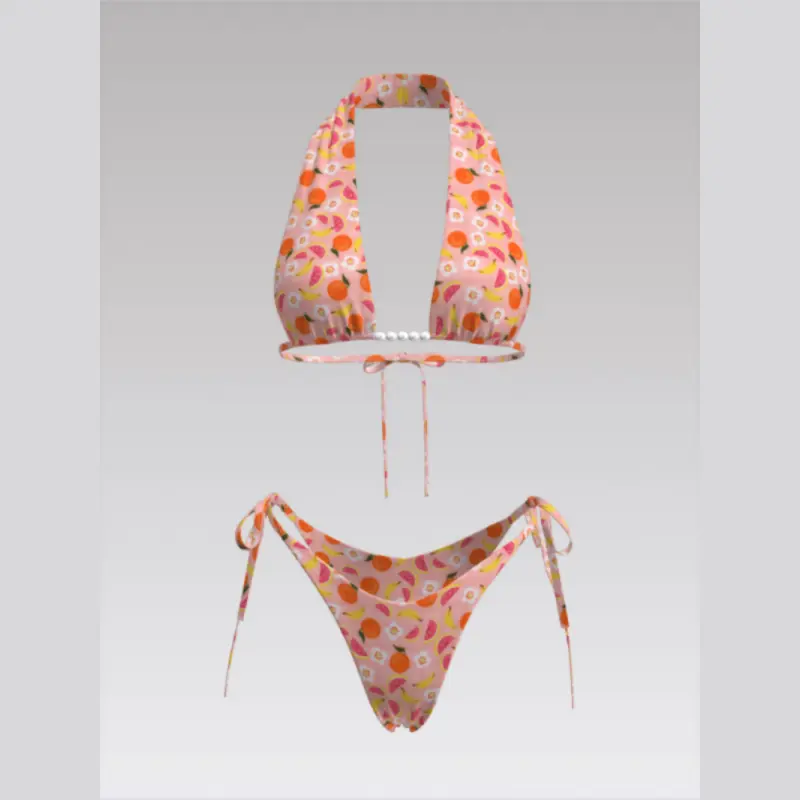
For a split bikini, the top and bottom should also be evaluated separately. A supportive bikini top may require greater fabric stability, while the bottom may benefit from slightly more flexibility around the hip and leg opening.
| Fabric Type | Main Strength | Key Consideration | Suitable Applications |
|---|---|---|---|
| Nylon + Elastane | Soft feel and strong stretch | Chlorine resistance varies by specification | Fashion bikinis and premium resort swimwear |
| Polyester + Elastane | Durability and colour retention | May feel firmer than some nylon blends | Active swimwear and printed collections |
| Recycled Polyester Blend | Sustainability positioning | Recovery and hand feel still require testing | Eco-focused swimwear programmes |
| Textured or Rib Fabric | Distinctive visual appearance | May require adjusted pattern tension | Fashion and boutique collections |
Good swimwear fabric needs sufficient stretch to follow body movement, but stretch percentage alone does not determine performance. Recovery is equally important. A fabric may extend easily during fitting but lose tension after repeated wear if it cannot return effectively to its original dimensions.
For most fitted swimwear, four-way stretch is preferred because it allows movement both horizontally and vertically. This is especially useful around the bust, hips, crotch, and leg openings.
When evaluating materials from activewear fabric suppliers, brands should compare both stretch and recovery after repeated extension. Testing a fresh fabric swatch only once may not reveal how the material behaves after prolonged use.
Fabric weight influences coverage, support, drying speed, and the overall feel of the finished swimsuit. Very lightweight fabrics may feel comfortable and dry quickly, but they can become transparent when wet or overstretched. Heavier fabrics may provide stronger compression and coverage but can feel less flexible.
Rather than selecting a fabric based on GSM alone, brands should evaluate the complete construction. A medium-weight outer fabric with a suitable lining can sometimes provide better performance than a much heavier single-layer fabric.
Light colours require particular attention. White, beige, pastel, and pale printed fabrics should undergo wet-opacity testing before approval because their coverage can change significantly after becoming wet.
The answer depends on the intended product positioning.
Nylon-elastane blends are usually preferred when softness, smoothness, and a premium touch are priorities. They are widely used in fashion swimwear where the garment is expected to sit closely against the skin.
Polyester-elastane blends are attractive for products that need stronger resistance to fading and repeated pool use. Polyester also performs well with certain all-over printing methods, making it useful for highly graphic collections.
For brands building a broader custom swimwear wholesale range, it can make sense to use different fabric specifications across fashion, resort, and performance lines instead of forcing one material to serve every application.
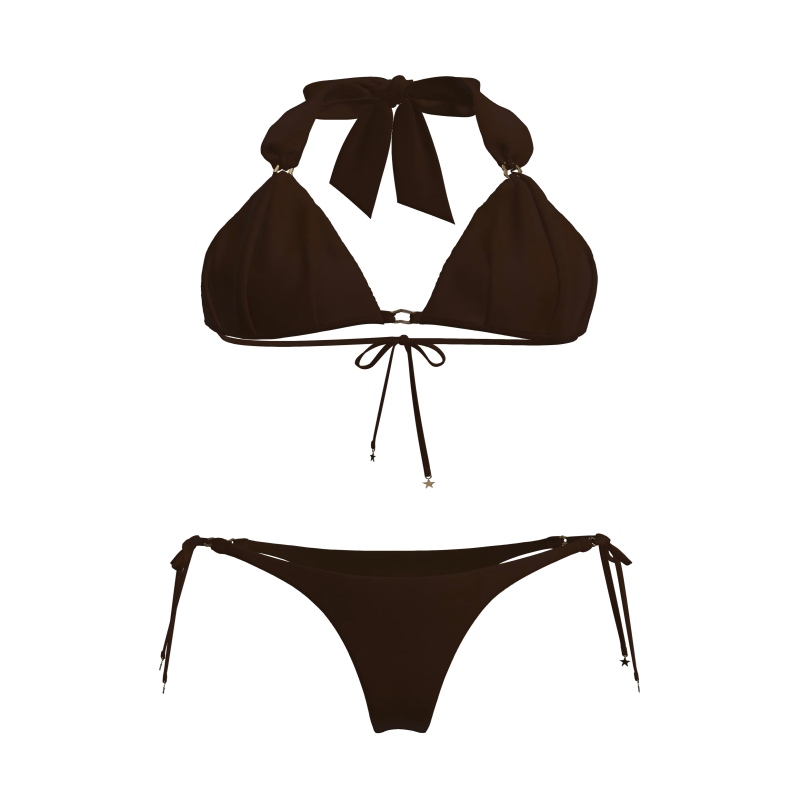
Swimwear is regularly exposed to conditions that ordinary apparel does not face. Chlorine, salt, sunscreen, body oils, and UV exposure can gradually affect colour and fibre performance.
A material intended for frequent pool use should be assessed for colourfastness and fibre stability after repeated chlorine exposure. Swimwear designed primarily for beaches and resorts should also be tested for saltwater resistance and drying performance.
Salt left in the fabric can contribute to stiffness if garments are not rinsed properly, while repeated sun exposure can fade weak dyes. These factors become particularly important when a brand is selling swimwear as a durable premium product.
Lining improves more than opacity. It can provide extra structure around the bust, stabilise the front of bikini bottoms, improve comfort around seams, and reduce visible fabric distortion.
Full lining is useful for light-coloured or high-coverage products, while partial lining may reduce unnecessary bulk. Bikini tops with removable pads, underwire, or internal support panels may require more stable lining than simple triangle tops.
The stretch characteristics of the outer fabric and lining should also be compatible. If one layer stretches much more than the other, the finished garment can wrinkle, twist, or feel uneven.
Print method and fibre composition should be planned together. Polyester-based materials are commonly selected for sublimation because they can support detailed all-over graphics and strong colour reproduction. Nylon blends may require different printing methods depending on the fibre composition and finish.
Placement prints require additional pattern planning. Logos, stripes, and geometric designs can distort around the bust and hips because the garment stretches differently across different body areas.
Brands should therefore approve prints on actual garment samples rather than evaluating artwork only on flat fabric.
Before bulk production, brands should evaluate stretch recovery, wet opacity, colourfastness, dimensional stability, pilling, seam performance, fabric hand feel, elastic compatibility, and print durability.
Garment-level testing is equally important. A fabric that performs well as a swatch may behave differently after adding elastic, cups, lining, hardware, ruching, or decorative trims.
Wear testing should include sitting, walking, swimming movements, and repeated stretching so developers can identify issues that may not appear during a static fitting.
The best custom split swimsuit fabric is not simply the softest or most elastic option. It should provide the right balance of comfort, recovery, coverage, colour stability, and durability for the intended customer and wearing environment. By testing fabric together with lining, elastic, print, and garment construction, brands can reduce fit problems and create swimwear that performs consistently from first fitting through repeated use.