English
 한국어
한국어 Español
 العربية
 dansk
dansk Ελλάδα
The activewear industry has changed significantly over the past few years. Yoga apparel is no longer limited to workout sessions or fitness studios. Today, consumers wear yoga leggings while traveling, shopping, working remotely, and even in casual social settings. This shift has transformed yoga pants from a niche fitness product into one of the most important categories in the global athleisure market.
For retailers, startup activewear brands, and online sellers, choosing the right manufacturing partner has become a critical business decision. A reliable yoga pants supplier does much more than produce leggings in bulk. The right supplier can help brands maintain product consistency, improve fit quality, adapt to market trends, and build long-term customer trust.
At the same time, the wrong supplier can create serious problems, including inconsistent sizing, delayed production, poor stitching quality, and fabric performance issues that lead to product returns and negative customer feedback. Because yoga leggings are designed for movement and close-to-body comfort, customers are usually more sensitive to quality problems compared to ordinary fashion apparel.
As competition in the activewear market continues to increase, brands are paying closer attention to supplier experience, technical manufacturing capability, and customization flexibility. This guide explains the key factors businesses should evaluate before choosing a yoga leggings manufacturer in 2026.
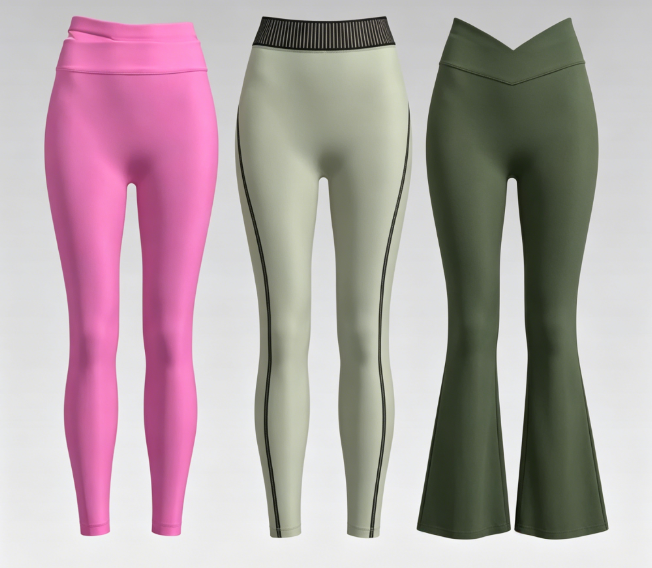
Before reaching out to manufacturers, brands should first clarify their own product positioning and target market. This step is often overlooked by new businesses, but it directly affects supplier selection, fabric choices, pricing strategy, and customization requirements.
Different suppliers specialize in different segments of the activewear market. Some focus on budget-friendly mass production, while others are more experienced in premium activewear collections with advanced fabrics and technical construction. A supplier that works well for a fashion-focused athleisure brand may not be the best fit for a performance-oriented fitness label.
Brands should consider several important questions before starting supplier discussions:
·Who is the target customer?
·Is the collection designed for workouts, casual athleisure, or both?
·Will the brand focus on minimalist basics or trend-driven styles?
·Is there a plan to expand into a full custom yoga set collection later?
Clearly defining these goals makes communication with suppliers more efficient and reduces misunderstandings during sampling and production.
Consumer expectations are also evolving quickly. Today’s shoppers expect yoga leggings to combine comfort, durability, flexibility, and flattering fit. Because of this, brands increasingly prefer suppliers that understand both technical performance and modern activewear trends.
A reliable manufacturer should offer more than basic garment production. Strong product development capability has become increasingly important for brands that want to remain competitive in the fast-moving activewear market.
Experienced suppliers typically support customers throughout multiple stages of development, including fabric recommendations, pattern adjustments, color matching, logo placement, and sampling revisions. These services can significantly improve development efficiency, especially for smaller brands without large in-house design teams.
It is also important to evaluate whether the supplier can support future business growth. Many brands start with yoga leggings but later expand into sports bras, jackets, yoga tops, or coordinated activewear collections. Working with a supplier that already has experience across multiple activewear categories can simplify long-term collection development.
Manufacturers such as outpace sportswear often support a wider range of activewear products, allowing brands to maintain greater consistency across fabrics, sizing, and production standards.
Production experience matters as well. Yoga leggings require technical construction methods that differ from ordinary apparel manufacturing. Reliable suppliers should understand details such as compression balance, flatlock stitching, waistband stability, and stretch recovery. These technical elements directly affect how the product performs during workouts and everyday wear.
Fabric quality remains one of the most important factors when selecting a yoga leggings supplier. Unlike ordinary fashion garments, yoga pants must maintain comfort and flexibility during stretching, bending, and repeated movement.
Modern consumers expect yoga leggings to provide both performance and comfort. Features such as moisture-wicking capability, four-way stretch, breathability, and squat-proof coverage are now considered standard expectations in many markets.
Most premium yoga leggings use nylon-spandex or polyester-spandex blends because these materials balance elasticity, durability, and softness effectively. However, fabric composition alone is not enough. The quality of knitting, fabric density, and recovery performance also influence how the leggings feel after long-term use.
Stitching quality is equally important. Poor seam construction may cause irritation, reduced durability, or transparency problems during movement. Waistband structure also plays a major role in comfort and support, especially for high-waisted leggings.
The table below highlights several important factors brands should evaluate before choosing a supplier.
| Evaluation Factor | What Brands Should Check |
|---|---|
| Fabric Quality | Stretch, softness, moisture-wicking ability |
| Squat-Proof Performance | Opacity during movement and exercise |
| Product Categories | Leggings, sports bras, yoga tops, sets |
| Customization Options | Logos, labels, packaging, colors |
| MOQ Flexibility | Suitable order quantities for growth |
| Production Capacity | Sampling and bulk order support |
| Quality Control | Inspection standards and consistency |
Whenever possible, brands should request physical samples before placing large orders. Fabric feel, elasticity, seam quality, and fit consistency are often easier to evaluate in person than through photos or technical sheets alone.
Fit consistency is one of the most common challenges in activewear manufacturing. Because yoga leggings fit closely to the body, even small measurement inconsistencies can affect comfort, movement, and customer satisfaction.
Professional suppliers should provide detailed size charts, international grading support, and sample revision processes to help brands improve fit accuracy. This becomes especially important for businesses selling globally, as sizing expectations can vary significantly between North America, Europe, and Asia.
Different body types may also require adjustments in waistband compression, inseam length, or hip measurements. Suppliers with strong activewear experience usually understand how to balance support and flexibility without making leggings feel restrictive.
Brands that invest time in fit development often experience lower return rates and stronger long-term customer loyalty. In today’s activewear market, comfort and confidence are major purchasing factors, particularly for repeat buyers.
MOQ, or Minimum Order Quantity, is often one of the first topics discussed during supplier negotiations. However, selecting the supplier with the lowest MOQ is not always the best long-term strategy.
Brands should also evaluate whether the manufacturer can support future business growth, seasonal demand increases, and repeat production orders. Reliable suppliers should communicate clearly about production schedules, material sourcing timelines, and delivery expectations.
For smaller brands, flexible MOQ options may help reduce inventory pressure during early-stage product testing. Larger retailers, however, often prioritize stable production capacity and consistent lead times over minimum order flexibility.
A dependable supplier should also maintain clear communication throughout the production process. Delayed responses or unclear production timelines are often warning signs of weak internal organization.
Private label activewear continues to grow as more businesses launch independent fitness and athleisure brands. Because of this, customization capability has become an increasingly important factor when evaluating manufacturers.
A professional supplier should support customization options such as logo printing, woven labels, custom packaging, waistband branding, exclusive colors, and fabric variations. These details help brands create stronger market differentiation and improve customer recognition.
Suppliers with flexible development capability can also help brands respond more quickly to changing fashion trends and seasonal color preferences. In the modern activewear market, speed and adaptability often influence competitiveness as much as pricing.
Comparing prices alone is rarely enough when evaluating activewear manufacturers. Asking detailed operational and technical questions often reveals how experienced and organized a supplier truly is.
Useful questions include:
·What fabric compositions are commonly used?
·Can pre-production samples be provided?
·How is squat-proof performance tested?
·What quality inspection procedures are followed?
·Does the supplier support private label packaging?
·What are the average production lead times?
·How are sizing revisions managed?
Experienced suppliers are usually transparent about their manufacturing process and willing to explain technical details clearly.
In the activewear industry, consistency often matters more than short-term cost savings. Working with a stable manufacturing partner can improve communication efficiency, product consistency, and collection development over time.
Suppliers familiar with a brand’s identity are often better equipped to recommend suitable fabrics, fit adjustments, and seasonal design improvements. This type of long-term collaboration can help brands respond more effectively to changing consumer preferences.
As competition in the global fitness apparel market continues to grow, businesses increasingly value suppliers that combine technical expertise, dependable production schedules, and customization flexibility.
For brands searching for a reliable yoga pants supplier, selecting an experienced manufacturing partner is an important step toward building a stable and scalable activewear business.
Choosing the right yoga leggings manufacturer involves more than comparing prices or MOQ requirements. Fabric quality, fit consistency, production reliability, and customization capability all influence long-term business success. Brands that carefully evaluate suppliers before production are more likely to build stronger activewear collections and maintain customer trust in an increasingly competitive market.