English
 한국어
한국어 Español
 العربية
 dansk
dansk Ελλάδα
The right one-piece swimsuit should be selected according to torso length, bust volume, waist-to-hip proportion, desired coverage, and intended activity rather than relying only on broad body-shape labels. A well-fitted swimsuit should remain secure without excessive shoulder pressure, neckline gaping, crotch pulling, or leg-opening restriction. For brands, understanding these fit variables is essential when developing a one-piece collection that needs to perform across a wider size range.
Bust, waist, and hip measurements are important, but torso length is one of the most critical measurements for one-piece swimwear.
If the body length of the swimsuit is too short, the garment may pull strongly at the shoulders and crotch. If it is too long, excess fabric can wrinkle around the waist, lower back, or seat.
For brands developing one piece swimsuit wholesale collections, torso measurements should therefore be included in the fit-development process rather than relying only on standard horizontal body measurements.
| Fit Requirement | Recommended Design Features | Common Fit Risk |
|---|---|---|
| Long torso | Adjustable straps, adequate body length, strong vertical stretch | Shoulder and crotch pulling |
| Fuller bust | Wide straps, supportive lining, underbust structure | Spillage or insufficient support |
| Fuller waist | Balanced compression, ruching, stable lining | Excessive pressure around the waist |
| Fuller hips | Adequate seat volume and secure leg opening | Riding up or cutting into the leg |
| Athletic upper body | Flexible armholes and shoulder-friendly straps | Restriction around shoulders and back |
Support should come from the complete garment structure rather than simply tightening the shoulder straps.
Wider straps, underbust bands, moulded cups, removable pads, power mesh, and supportive front lining can all improve stability. Side panels also help control lateral movement and maintain bust positioning.
Neckline depth matters as well. A low neckline can create a strong fashion effect, but it usually requires more internal engineering if the customer expects substantial support. Higher necklines provide more coverage but should still allow comfortable shoulder movement.
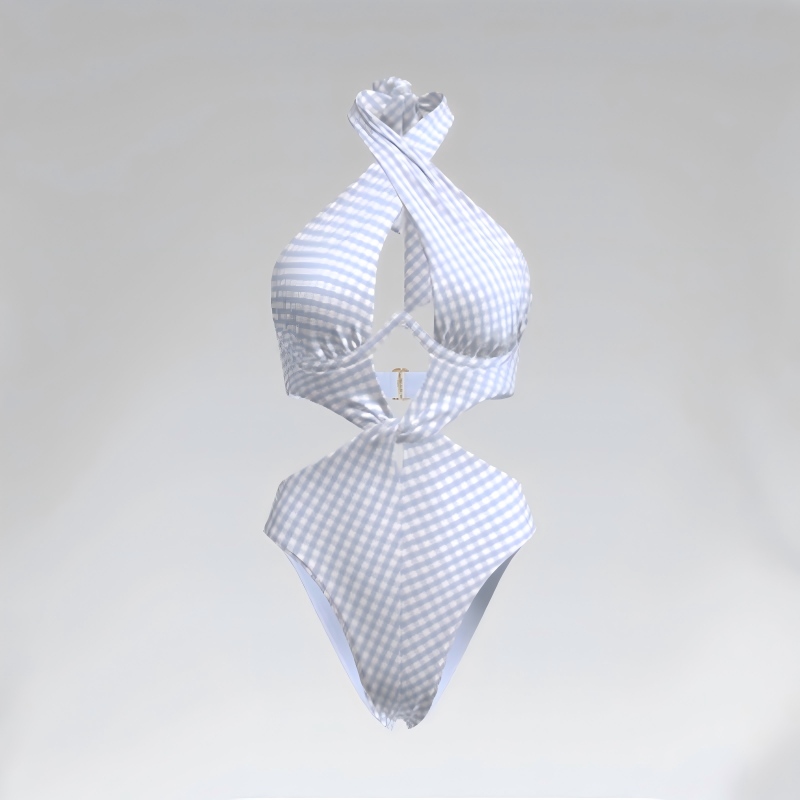
Long-torso customers need adequate vertical garment length. Stretch fabric can help accommodate differences, but elasticity cannot fully compensate for an incorrectly proportioned pattern.
Adjustable shoulder straps are useful because they allow the wearer to modify upper-body tension. However, straps should not need to be excessively loosened just to create enough torso length.
Brands should review body length during size-set fitting and test whether the swimsuit remains comfortable while bending, sitting, and extending the arms overhead.
For shorter torsos, excessive body length can cause fabric to gather around the waist or lower back. The solution is usually a better pattern proportion rather than simply reducing the overall garment size.
Higher leg openings, correctly positioned waist seams, and vertical design details can also create a visually longer silhouette without compromising physical fit.
A one-piece swimsuit should feel secure and close to the body, but excessive pressure is usually a sign of incorrect sizing, insufficient torso length, or inappropriate fabric tension.
Some compression is expected because the garment must remain stable in water. However, deep shoulder marks, restricted breathing, strong crotch pressure, or visible neckline distortion should not be considered normal.
For brands offering custom swimwear wholesale programmes, it is useful to develop different support levels rather than applying the same compression specification to every style.
Ruching, colour blocking, curved side panels, contrasting waist details, and strategic cut-outs can all create stronger visual waist definition.
However, visual design should not override fit performance. A large side cut-out may look attractive on a sample but can reduce garment stability when the wearer bends or swims.
Cut-out styles therefore require careful elastic reinforcement and accurate placement across different sizes.
A suitable leg opening should remain close to the body without digging into the skin. Fuller hips generally require adequate pattern width through both the hip and seat rather than simply using a softer elastic.
Higher-cut legs can visually lengthen the lower body, while moderate or lower-cut styles provide additional coverage. Neither option is automatically better; the correct choice depends on customer preference and overall body proportion.
Brands can also extend the collection with a coordinated wholesale swimsuit cover up for customers who want additional coverage before or after swimming without changing the structure of the swimsuit itself.
Athletic customers may have broader shoulders, a straighter waist, or stronger upper-body development. The swimsuit should provide enough flexibility around the armhole and back without becoming loose around the waist.
Asymmetric necklines, colour blocking, curved panels, and adjustable straps can help create visual balance while maintaining functional movement.
For active swimming, shoulder mobility should remain the priority. Decorative straps that limit arm rotation may look attractive but can reduce comfort during repeated strokes.
Simply increasing every measurement by the same percentage is rarely the best grading strategy.
Bust volume, waist circumference, hip width, seat depth, and torso length do not increase at exactly the same rate across a broad size range. Larger sizes may also require wider straps, more stable support panels, or adjusted neckline depth.
Size-set fitting should therefore include multiple body types wherever possible. This helps identify problems that may not be visible when only a sample size is tested.
Fit testing should include standing, sitting, bending, raising the arms, and simulated swimming movement. Developers should check whether the shoulder straps dig in, whether the neckline gaps, whether the leg opening moves, and whether the seat remains properly covered.
Fabric recovery should also be checked after repeated stretching because a swimsuit that fits correctly when new may become loose if the material loses tension too quickly.
Choosing the right one-piece swimsuit requires more than matching a style to a general body-shape category. Torso length, bust support, hip proportion, leg opening, fabric recovery, and activity level all influence the final fit. Brands that test these elements across different sizes and body proportions are better positioned to create comfortable swimwear, reduce fit-related returns, and build collections that serve a broader customer base.