English
 한국어
한국어 Español
 العربية
 dansk
dansk Ελλάδα
Racerback and cross-back yoga tops can both support comfortable movement, but they perform differently depending on strap geometry, underband construction, fabric recovery, and activity intensity. Racerback designs generally provide a clean shoulder area and reliable freedom for overhead movement, while cross-back designs offer greater styling flexibility and can distribute strap tension differently. The better option depends on the type of yoga or training, desired support level, and fit requirements of the target customer.
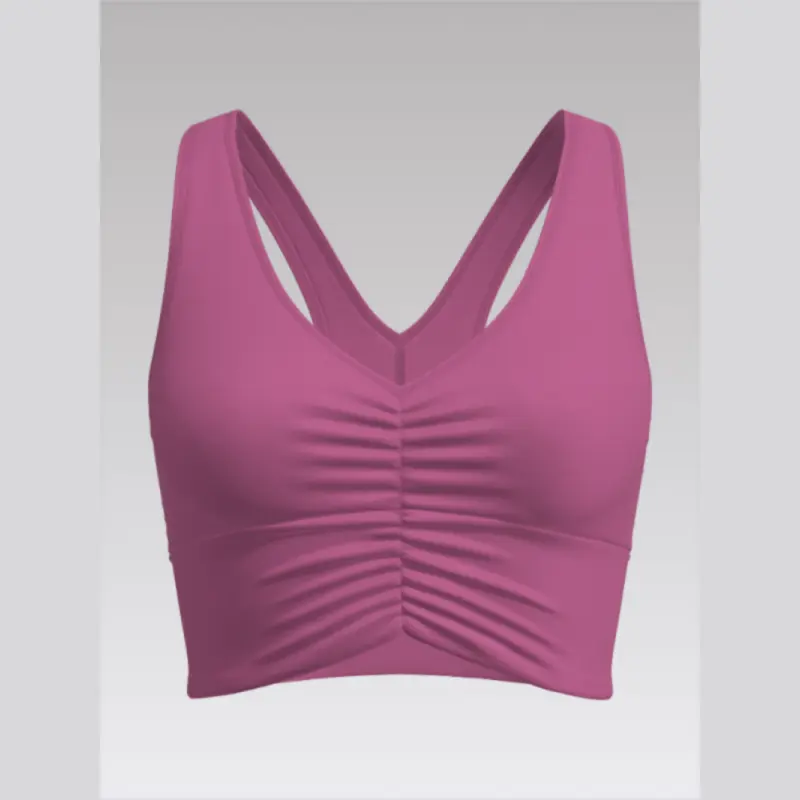
A racerback brings the shoulder straps toward the centre of the upper back, usually creating a Y-, T-, or curved athletic shape. This leaves more of the shoulder area uncovered and can reduce interference during repeated arm movement.
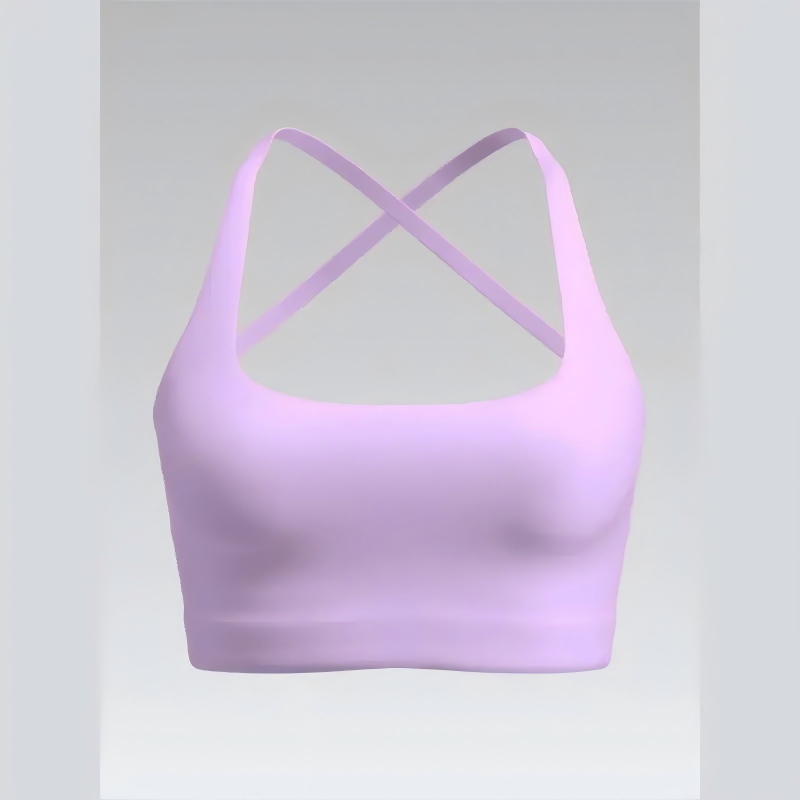
Cross-back designs use two or more straps that cross across the back. Depending on the style, these straps may be fixed, adjustable, narrow, wide, or layered.
When developing a wholesale yoga bra top, strap style should be considered as a functional pattern decision rather than a purely decorative feature. Strap position can influence neckline stability, pressure distribution, shoulder movement, and overall support.
| Design Factor | Racerback | Cross-Back |
|---|---|---|
| Shoulder movement | Excellent for repeated overhead movement | Very good when straps are positioned correctly |
| Support potential | Good for medium and higher-support structures | Depends strongly on strap and underband design |
| Adjustability | Often fixed | More options for adjustable construction |
| Visual style | Clean and athletic | More decorative and fashion-oriented |
| Construction complexity | Relatively straightforward | Requires accurate strap positioning |
Racerback tops are particularly suitable for activities involving repeated overhead movement because the straps are positioned away from the outer shoulder area.
This can make them practical for vinyasa yoga, power yoga, strength training, and gym workouts. However, the racerback itself must be correctly proportioned. If the back section is too narrow or positioned too close to the neck, it may create unnecessary pressure.
Armhole shape also affects mobility. A well-designed racerback should allow the shoulder blade to move without the edge of the garment rubbing against the skin.
Not necessarily. Support is created by the full garment structure, including the underband, fabric compression, cup construction, side panels, neckline, and strap width.
A cross-back top made with several thin decorative straps may provide less support than a racerback with a wide underband and stable fabric. On the other hand, wider adjustable cross straps can create good control while allowing customers to modify strap tension.
This is why support should be evaluated through movement testing rather than judged from the back design alone.
For faster vinyasa flows, power yoga, and yoga combined with strength training, racerback constructions are often effective because they maintain a compact structure around the shoulder blades.
The design also reduces the number of loose or crossing straps that may shift during repeated movement.
However, overall outfit mobility matters as well. Pairing the top with correctly developed custom yoga shorts allows brands to evaluate whether both the upper and lower garments remain stable during squats, lunges, twists, and deep hip-flexion positions.
For gentle yoga, restorative practice, Pilates, and studio wear, both racerback and cross-back tops can perform well.
At lower intensity levels, comfort, ventilation, and freedom from pressure points may be more important than maximum compression. Cross-back designs can therefore be especially attractive when the collection has a stronger fashion or lifestyle positioning.
Thin straps should still be tested carefully because concentrated pressure can become uncomfortable during longer sessions.
Nylon-elastane and polyester-elastane blends are commonly used because they provide stretch, recovery, and moisture management. However, fibre composition alone does not determine performance.
Fabric weight, knit density, surface feel, and stretch modulus all influence how supportive the top feels.
A light studio crop top may use a softer, more flexible fabric, while a supportive yoga bra top usually benefits from a denser construction with stronger recovery.
The underband should remain in place when the wearer raises the arms, bends forward, or twists. It should feel secure around the rib cage without restricting breathing.
If the band repeatedly moves upward, the garment may be too loose or the pattern balance may be incorrect. Tightening the shoulder straps is not an appropriate solution for an oversized underband.
This is especially important for cross-back designs because changing strap tension can influence how the entire top sits on the body.
Top length and bottom rise influence both coverage and overall visual proportion. Longline yoga tops often pair effectively with high-rise leggings because the combination provides comfortable torso coverage without requiring an additional outer layer.
Brands developing coordinated collections can pair racerback or cross-back tops with wholesale womens yoga pants using repeated colours, seam lines, contrast panels, or fabric textures to create a stronger product family.
A static fitting does not provide enough information for activewear approval.
Samples should be tested during overhead reaches, downward dog, plank positions, twists, forward folds, squats, and rotational movements. Developers should check whether the straps shift, the neckline gaps, the underband rolls, or the armhole creates friction.
Cross-back tops also require careful strap symmetry. Small differences between left and right strap lengths can become visually obvious and may create uneven tension.
Brands do not necessarily need to choose only one construction. Racerback styles can form the performance-focused part of a collection, while cross-back styles can offer a more fashion-oriented alternative.
The decision should follow the intended customer, activity level, bust support requirement, and visual identity of the collection rather than current styling trends alone.
Racerback yoga tops are particularly effective when unrestricted shoulder movement and a clean athletic structure are priorities, while cross-back designs provide greater styling flexibility and opportunities for adjustable construction. Neither design guarantees better support on its own. The best-performing yoga top combines appropriate strap geometry with a stable underband, reliable fabric recovery, correct neckline construction, and real movement testing before bulk production.