English
 한국어
한국어 Español
 العربية
 dansk
dansk Ελλάδα
Two-piece and one-piece swimwear may use similar fabrics and share many design details, but they do not present the same pattern-making challenges. The fundamental difference is how the garment interacts with the body. A one-piece swimsuit has to coordinate fit across the bust, waist, hips, and torso within one continuous structure, while a two-piece design separates the upper and lower body into independent components.
That structural difference affects nearly every stage of development, from taking measurements and creating the initial pattern to grading sizes and evaluating samples. For swimwear brands, understanding these differences is important when deciding which silhouette to develop and how much pattern refinement may be required before bulk production.
The biggest difference is that a one-piece swimsuit needs to accommodate vertical body length as well as horizontal measurements. A two-piece design can adjust the fit of the top and bottom independently, while a one-piece must connect those two areas through a continuous torso section.
This makes torso length a particularly important measurement for one-piece swimwear. If the garment is too short, the wearer may experience excessive tension through the shoulders, bust, or crotch area. If it is too long, the swimsuit may develop unwanted looseness or wrinkling through the torso.
Two-piece swimwear has a different advantage. The top can be developed around bust and upper-body requirements, while the bottom can be fitted according to waist, hip, and leg measurements. This separation provides more flexibility when serving customers with different proportions.
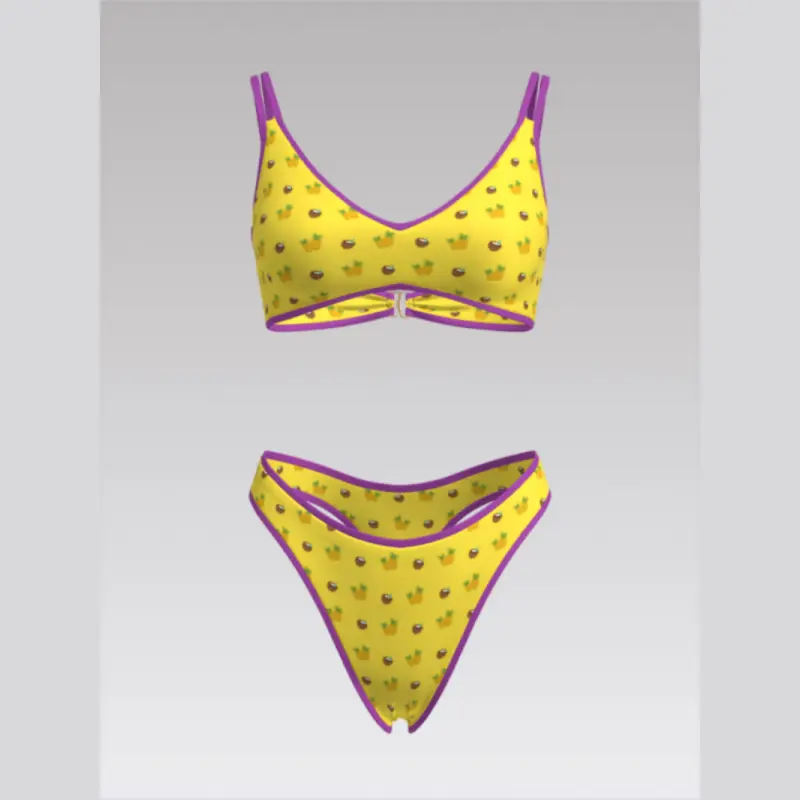
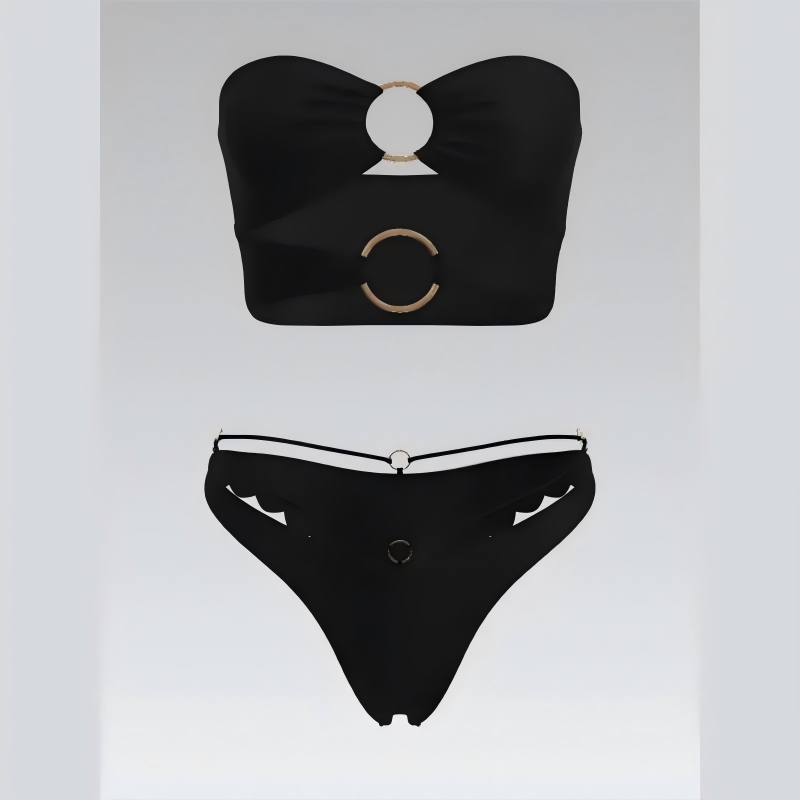
Outpace's split swimsuit collection reflects this modular structure, with separate bikini tops and bottoms available in different combinations and silhouettes.
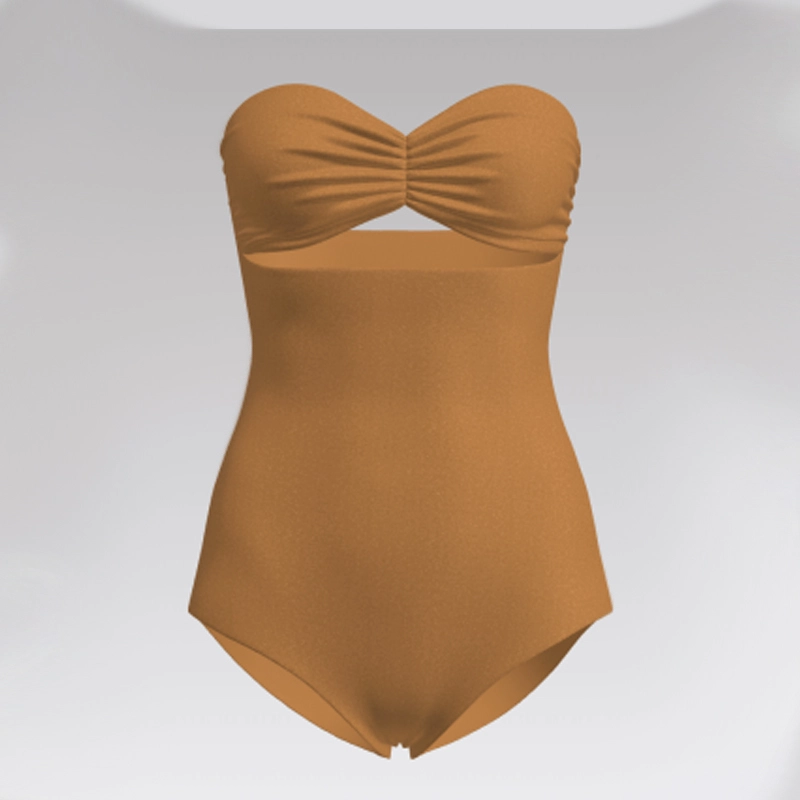
Torso length is one of the measurements that makes one-piece pattern development more demanding. Unlike a two-piece swimsuit, where the waist area creates a natural separation, a one-piece garment must distribute stretch continuously from the upper body to the lower body.
The challenge becomes more noticeable when the design includes features such as a high neckline, built-in bust support, adjustable straps, waist shaping, or high-cut legs. Each feature can change how tension is distributed through the garment.
For example, increasing the rise or reducing torso length can create additional upward tension. That tension may be transferred to the shoulder straps or neckline rather than remaining isolated around the waist.
Brands developing one piece swimsuit wholesale collections should therefore evaluate torso length as a functional measurement, not simply as a styling detail. Outpace's one-piece range includes designs with different necklines, back constructions, cutouts, support features, and coverage levels, illustrating how changes in silhouette can require different pattern approaches.
Pattern grading involves increasing or decreasing a base pattern to create different sizes, but the process is not simply a matter of adding the same amount everywhere.
For two-piece swimwear, the top and bottom can be graded according to their respective body measurements. This provides greater flexibility when the target market has substantial variation between bust, waist, and hip proportions.
One-piece swimwear is more interconnected. Changes to bust or hip measurements can affect the length and balance of the entire pattern. If grading is not carefully controlled, the garment may fit correctly around the circumference but become too long or too short through the torso.
Brands should therefore check not only the finished garment measurements but also the relationship between key measurement points after grading. A size increase should preserve the intended silhouette rather than simply produce a larger version of the base sample.
Swimwear patterns cannot be developed independently from fabric stretch. The amount and direction of stretch determine how closely the finished garment should match the body's measurements.
A highly elastic fabric may allow a smaller finished garment measurement because it can expand comfortably around the body. A fabric with less stretch may require more ease or a different pattern balance.
Recovery is equally important. If a material stretches significantly but does not return effectively to its original dimensions, a pattern that appears correct during initial fitting may become loose after repeated wear.
For both one-piece and two-piece swimwear, brands should therefore evaluate fabric performance before finalizing the production pattern. Outpace's swimwear pages emphasize fabric customization and support different fabric specifications for customized products.
Two-piece bottoms provide an important advantage because the waist and hip fit can be developed independently from the upper garment. This makes it easier to create different bottom silhouettes, including high-waisted, mid-rise, low-rise, and higher-cut designs.
However, this flexibility also creates another development challenge: the waistband, leg opening, and hip area need to work together. A waistband that is too tight may create unnecessary pressure, while an opening that is too loose can compromise stability during movement.
For wholesale collections, brands should also consider how the same bottom pattern performs across different fabric compositions. Changing the material without recalibrating the pattern can alter the final fit even when the nominal measurements remain unchanged.
Support requirements can substantially change the construction of both swimsuit types. A simple fashion-oriented bikini top may rely primarily on fabric tension and straps, while a more supportive design may require lining, wider straps, underbust structures, molded components, or additional reinforcement.
One-piece swimwear can integrate support directly into the main garment, which creates opportunities for built-in shaping and coverage. However, these elements also add complexity because the support structure must remain compatible with the overall torso pattern.
Outpace's customized one-piece products can incorporate features such as support adjustments, different sewing methods, and customized sizing, allowing the construction to be adapted to the intended product concept.
Small construction decisions can have a noticeable effect on the final fit of swimwear because the fabric remains under tension during wear.
Strap attachment: affects upper-body stability and pressure distribution.
Elastic insertion: influences how securely openings remain against the body.
Seam placement: changes both stretch behavior and pressure distribution.
Lining: can increase coverage and modify the garment's overall hand feel.
Leg opening construction: affects comfort and stability around the hips and thighs.
Back design: influences both visual appearance and the amount of support available.
These details become especially important when a design contains cutouts or unusual panel shapes. Removing fabric from one area can increase tension in another, so the pattern needs to account for the entire construction rather than treating each design feature separately.
A one-piece pattern becomes particularly demanding when several fit requirements need to be satisfied simultaneously. High-support designs, complex cutouts, asymmetrical necklines, long sleeves, high-cut legs, and strong waist shaping can all increase development complexity.
For example, a swimsuit may need to provide sufficient bust support while also maintaining comfortable torso length and stable leg openings. Adjusting one area can influence another because the garment is connected.
Outpace's current one-piece collection includes designs ranging from halter and bandeau styles to long-sleeve, high-neck, cutout, ruched, and tummy-control constructions. This variety demonstrates why “one-piece swimsuit” is not a single pattern category but a broad group of different engineering requirements.
The decision should start with the intended customer and product function rather than simply choosing the easier pattern to develop.
A two-piece swimsuit may be more suitable when mix-and-match flexibility, independent top and bottom sizing, or multiple styling combinations are important. A one-piece can be a stronger choice when the collection emphasizes continuous coverage, streamlined silhouettes, integrated support, or specific functional features.
From a product-development perspective, brands should also consider how many variations they plan to create from the same base pattern. A well-developed two-piece system can generate numerous top-and-bottom combinations, while a carefully engineered one-piece base can support several neckline, back, sleeve, and coverage variations.
For buyers evaluating wholesale one piece swimsuit options, it is therefore useful to look beyond the appearance of an individual sample and examine the supplier's ability to customize measurements, materials, and construction consistently across a collection.
Sample fitting should simulate the movements and conditions the finished swimsuit will encounter rather than relying only on a static fitting session.
For a one-piece swimsuit, check torso length, shoulder tension, neckline stability, bust placement, waist position, hip fit, and leg opening tension. The wearer should also move through bending, reaching, sitting, and rotational movements to identify tension that may not be visible while standing.
For a two-piece swimsuit, evaluate the top and bottom separately first, then assess them together. The top should remain stable without excessive strap movement, while the bottom should maintain its position around the waist and hips.
It is also important to compare samples after washing. Swimwear fabrics can change in dimensions and recovery after exposure to water, detergent, chlorine, salt, or heat. A sample that fits perfectly before testing may require pattern or material adjustments afterward.
The strongest approach is to treat pattern development as a combination of body measurements, fabric behavior, construction requirements, and intended use.
Two-piece swimwear offers greater modularity because the top and bottom can be developed independently. One-piece swimwear demands closer control of torso length and the relationship between upper and lower body measurements. Neither approach is inherently better; the right choice depends on the product's target market and functional requirements.
For brands working with a custom manufacturer, these considerations should be discussed before final sample approval. Outpace's current swimwear development process supports customized fabrics, sizes, colors, accessories, printing, and sewing methods, while its product range includes both one-piece and separate-piece designs.
Ultimately, successful swimwear fit is not created by measurements alone. It comes from understanding how those measurements interact with stretch, recovery, pattern geometry, and construction. When brands evaluate these factors together, they can develop swimwear that not only looks right on a sample but also maintains its intended fit across sizes, repeated wear, and different customer needs.