English
 한국어
한국어 Español
 العربية
 dansk
dansk Ελλάδα
A yoga top can fit perfectly when it is new and still become noticeably different after weeks or months of regular use. The problem is rarely caused by one factor alone. Repeated stretching, insufficient fabric recovery, heat exposure, incorrect washing, seam tension, and pattern decisions can gradually change the garment’s original dimensions.
For activewear brands, shape retention should therefore be considered during product development rather than treated as a quality issue after production. A well-designed yoga top needs to recover after movement, withstand repeated washing, and maintain stable dimensions around areas such as the neckline, straps, armholes, and underbust.
The most common cause is repeated mechanical stress. During yoga and other active movements, a top may be stretched in multiple directions hundreds of times throughout its service life. If the fabric or construction cannot recover sufficiently, the garment gradually develops permanent deformation.
Several factors can contribute to this process:
Low fabric recovery after stretching.
Excessive tension in the original pattern.
Repeated exposure to high washing or drying temperatures.
Weak or overly flexible construction in high-stress areas.
Improper elastic selection or attachment.
Dimensional instability after washing.
Shape loss may appear gradually rather than immediately. A neckline may become slightly wider, straps may lengthen, or the lower edge may stop sitting securely against the body. These changes can be small individually but become obvious after repeated wear.
Fabric stretch and fabric recovery are related, but they are not the same property. Stretch describes how far a material can extend, while recovery describes how effectively it returns toward its original dimensions.
For yoga apparel, recovery is particularly important because the garment is repeatedly exposed to bending, twisting, compression, and extension. A fabric with excellent stretch but poor recovery may feel comfortable during the first few sessions but gradually lose its original structure.
This is why material evaluation should go beyond checking whether a fabric feels elastic by hand. Brands should examine how the fabric behaves after repeated extension and whether its width and length remain stable afterward.
Outpace’s yoga wear range uses performance-oriented materials and offers customization of fabrics for different product requirements.
Yes. Care conditions can accelerate deformation when they expose elastic fibers to excessive heat, mechanical agitation, or unsuitable chemicals.
Repeated high-temperature drying is particularly relevant because heat can affect the elasticity and dimensional stability of synthetic performance fabrics. Strong washing cycles can also place additional mechanical stress on seams and elastic components.
For brands, this means care instructions should be considered part of product performance. A garment that maintains its shape under normal wear but deforms significantly after standard consumer washing may still create a poor customer experience.
Cold or cool washing, gentle cycles, and lower-temperature drying can help reduce unnecessary stress. Air drying is generally preferable when maintaining elasticity and shape is a priority. Outpace also recommends checking care labels, using cold water and gentle washing methods, and avoiding high heat when maintaining yoga wear.
Shape loss is rarely distributed evenly across the entire garment. Areas that experience repeated tension or movement tend to show changes earlier.
| Area | Typical Problem | Potential Cause |
|---|---|---|
| Neckline | Opening becomes wider | Repeated stretching and poor recovery |
| Shoulder straps | Straps become longer or less stable | Elastic fatigue or excessive tension |
| Armholes | Edges become loose | Repeated arm movement and edge stretching |
| Underbust | Reduced support | Elastic fatigue or fabric deformation |
| Side seams | Shape becomes distorted | Uneven tension or construction issues |
| Lower hem | Hem no longer sits evenly | Stretch imbalance or insufficient recovery |
Identifying the first area to deform can help manufacturers determine whether the problem originates from the material, pattern, elastic, or sewing process.
Yes. Pattern design can either distribute tension evenly or concentrate it in specific areas.
For example, a pattern that is too small may force the fabric to remain under excessive tension even when the wearer is standing normally. Every movement then adds further stress to the material. Over time, this can accelerate recovery loss.
On the other hand, excessive ease can create a different problem. If the garment is too loose, the wearer may experience shifting, sagging, or reduced support even when the fabric itself has good recovery.
Brands developing custom yoga tops should therefore evaluate pattern measurements together with the fabric’s actual stretch percentage. A pattern should not be designed independently from the material selected for production.
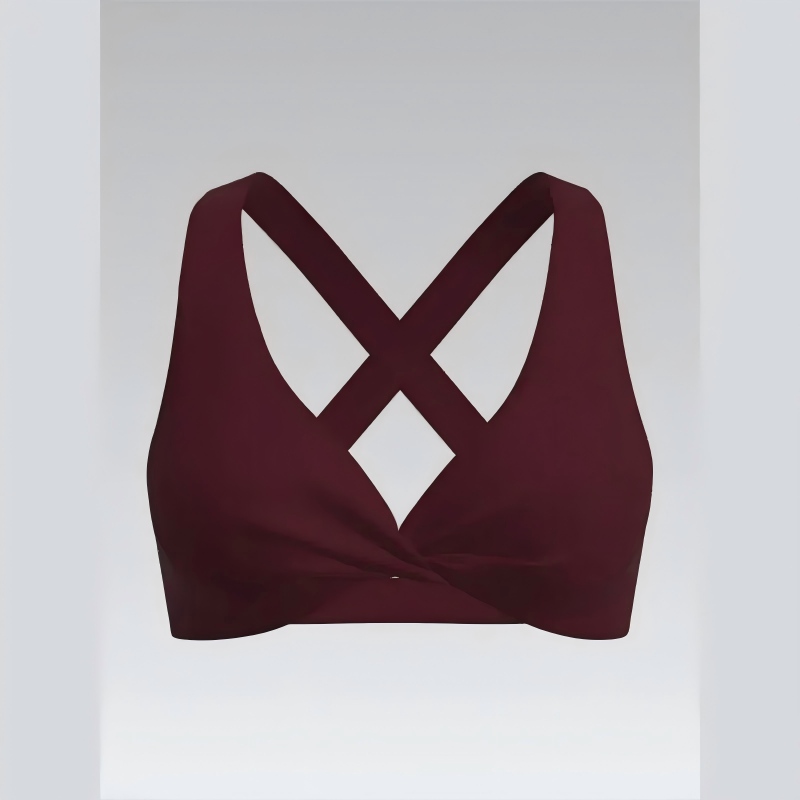
Shape retention should be tested before bulk production rather than relying entirely on visual inspection of the first sample.
A practical evaluation can include several stages. First, record the garment’s key measurements when new. These can include neckline width, strap length, underbust circumference, garment length, and armhole opening.
Next, subject the sample to repeated stretching and normal washing conditions. After testing, measure the same areas again. Comparing the original and post-test dimensions provides more useful information than simply judging whether the garment “looks different.”
Brands can also photograph samples before and after testing to identify subtle changes in construction. Particular attention should be paid to areas where elastic and fabric interact, because these areas may show deformation earlier than larger fabric panels.
Construction has a major influence on how stress travels through the garment. Even a high-quality fabric can perform poorly if seams, elastic, or edge finishing are not properly matched to the material.
Seam type should correspond to the expected movement and fabric stretch. In some applications, a seamless construction can reduce friction and create a cleaner appearance. In others, reinforced or specialized stitching may be more appropriate for areas exposed to higher loads.
Elastic components also need careful consideration. If an elastic band is too weak, the garment may lose support quickly. If it is too tight, it can place unnecessary stress on both the wearer and the surrounding fabric.
Outpace’s custom yoga products allow specifications such as fabric, size, accessories, printing, and sewing methods to be customized, making construction decisions part of the product-development process rather than a fixed afterthought.
Not every yoga top needs exactly the same durability profile. The appropriate target depends on how the product will be used and positioned in the market.
A premium performance collection may require strong recovery because customers expect the garment to retain its fit through frequent training. A fashion-oriented yoga collection may place greater emphasis on silhouette and appearance while still requiring sufficient recovery for normal activity.
This distinction matters when selecting materials and construction methods. Trying to maximize every performance characteristic simultaneously can increase cost without creating meaningful customer value. Instead, brands should identify which properties are most important for the intended product.
The most effective approach is to control shape retention at several stages rather than trying to solve the problem through fabric selection alone.
Start by selecting a fabric with appropriate stretch and recovery. Then develop a pattern that matches the material instead of applying fixed measurements across different fabrics. After that, evaluate elastic tension, seam construction, edge finishing, and washing behavior.
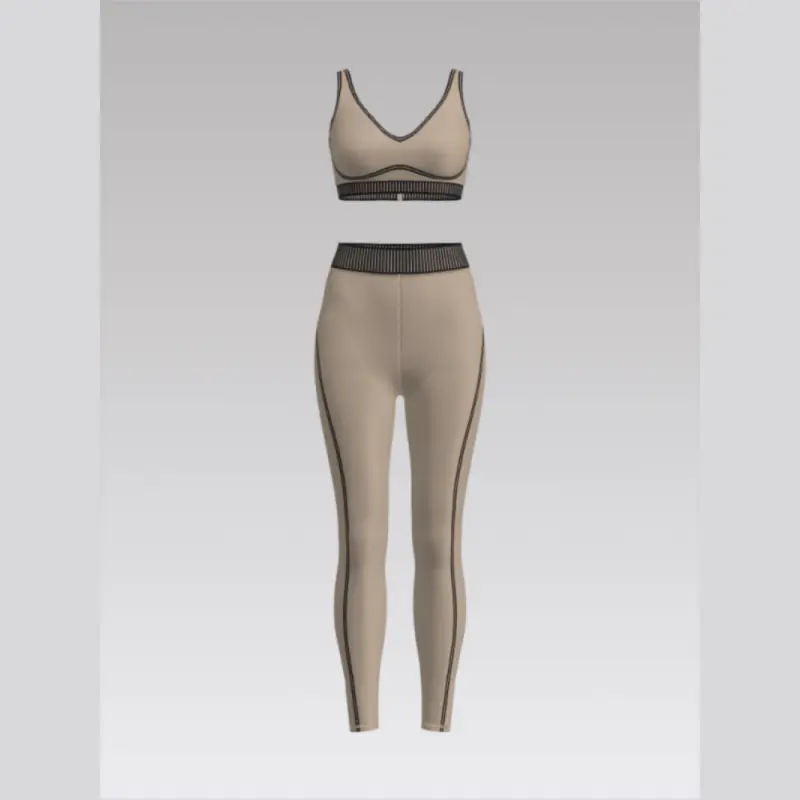
For brands developing a coordinated collection, a yoga set should also be evaluated as a complete system. The top and bottom may use similar fabrics but experience different mechanical stresses. A waistband, for example, may require different recovery characteristics from a shoulder strap or neckline.
Finally, establish measurable sample-testing criteria before approving production. This creates a repeatable quality standard that can be applied when scaling the same design or developing related products.
Shape retention directly affects how customers perceive quality. A yoga top that loses its original fit quickly may feel less supportive, look less refined, and generate dissatisfaction even if the original design was attractive.
For manufacturers and brands, the solution is not simply to choose a thicker or tighter fabric. Long-term performance comes from matching fabric recovery with pattern engineering, elastic tension, construction, and care requirements.
Brands working with yoga shorts manufacturers and other activewear suppliers should apply the same principle across the wider collection: test the complete garment under realistic conditions, identify where deformation begins, and adjust the material or construction before scaling production.
Ultimately, a yoga top retains its shape when every part of the product is designed around the same performance objective. Fabric needs to recover, patterns need to distribute tension, construction needs to withstand repeated movement, and care requirements need to be realistic for everyday use. Treating these elements as one connected system gives brands a much stronger foundation for consistent quality and long-term customer satisfaction.